Table of Contents
- Pennsylvania Home Selling
- Which Areas in Pennsylvania Offer the Best Return on Investment and Are Easiest for Residential
- What Home Styles, Sizes, and Features Tend to Sell Fastest in the Pennsylvania Market?
- What Should Home Sellers Know About Zoning Laws, Permits, and Regulatory Requirements in Pennsylvania?
- Which Towns or Cities in Pennsylvania Are the Easiest â and Hardest â When It Comes to Navigating Real Estate Regulations?
- What Are the Most Effective Flipping and Resale Strategies for Maximizing Profit in Pennsylvania's Housing Market?
- How Should Sellers Price Their Homes to Attract Buyers While Maximizing Value in Pennsylvania?
- Which Key Economic, Social, and Regulatory Factors Are Driving Current Trends in Pennsylvania's Local Property Markets?
Pennsylvania Home Selling

Home prices and demand for housing in Pennsylvania continue to rise, driven by factors like a growing population, wage growth, and household formation. With inventory levels lagging behind demand, competition among buyers remains stiff, steadily pushing up prices.
Pennsylvania's median home sale price jumped 6.5% year over year, hitting an all-time high of $325,000 in June 2025. This figure sits below the national median of $462,000, and well below pricier bordering states like New York ($501,982) and Maryland ($433,735). However, median home prices among Pennsylvania's western neighbors — Ohio ($241,500) and West Virginia ($170,904) — continue to offer a more affordable entry point for investors.
An average of 10,635 homes are sold each month in Pennsylvania, representing a 3.8% decline year over year. Neighboring states like New York and Ohio report averages of around 11,000 and 10,000 homes sold per month, respectively. The average days on market (DOM) for homes listed in Pennsylvania is about 37, reflecting strong demand.
New private housing construction permits issued in the Commonwealth of Pennsylvania range from 1,800 to 2,300 each month (seasonally adjusted). This figure is considerably lower than neighboring New York State and Ohio, with monthly averages of 2,993 and 3,399 permits, respectively.
While the property tax rate in Pennsylvania varies by county, a median-priced home in the Keystone State averages an effective rate of 1.26%. This is slightly lower than Ohio's average of 1.35%, but more than double West Virginia's 0.5% average.
The number of foreclosures in Pennsylvania puts the state at 29th nationally, with a foreclosure rate of 1 in 5,820 as of October 2025. Though certain areas of Pennsylvania — like Sullivan, Philadelphia, and Greene counties — see higher rates of foreclosure, the state's overall rate is markedly lower than in surrounding states like Ohio (1 in 3,026), Maryland (1 in 3,440), and New York (1 in 4,274).
Which Areas in Pennsylvania Offer the Best Return on Investment and Are Easiest for Residential
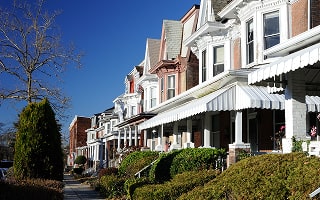
Thanks to its reasonable cost of living compared to many other Northeastern states, Pennsylvania presents a great opportunity for real estate investors seeking a solid return on investment (ROI). Additionally, the Commonwealth's stable and thriving economy generally reduces the risk of investing in property development, which may reduce some of the risks associated with real estate investments.
While the state has various laws and regulations that may impact real estate investments, its steady job market and sizable population can make rental properties a profitable investment, particularly in high-demand areas. Many towns, cities, and localities in the Commonwealth offer varying attractions that may assist individuals in making informed decisions to participate in the real estate industry in such places.
In Pennsylvania, the following areas may offer easier development opportunities and an attractive ROI for those looking to invest in real estate:
- Pittsburgh: This former manufacturing hub has now become one of the commonwealth's most desirable places to live. The overall housing market in Pittsburgh is balanced, with a typical sale price of about $270,000, which represents a modest year-over-year increase.
- Harrisburg: The state capital, with thousands of government jobs and proximity to major historical sites, is a viable place for real estate investment, as evidenced by a recent rise in median sales prices.
- Philadelphia: While the Philadelphia housing market tends to move slowly, it offers investors an opportunity to buy properties at below-average prices, renovate them, and resell them for a profit. And as one of the nation's largest cities, Philadelphia also has a strong rental market for longer-term investors seeking cash flows.
- Allentown: Allentown has become an attractive place for young people leaving urban centers in pursuit of more affordable housing and smaller-town life. As real estate development continues, home prices and rents are likely to increase, making Allentown a solid target for real estate investment.
- Reading: Reading's proximity to other cities — like Philadelphia, Trenton, and Wilmington, DE, makes it a good place for real estate investment. For patient investors with a more flexible time horizon, an investment in Reading could be rewarding over the long term.
- Erie: The strong local economy in Erie City makes it a relatively safe place for real estate investment.
- Williamsport: As the education and health sectors in Williamsport continue to grow, there's potential for increased rental demand, making the city an attractive target for real estate investment.
- Lancaster: Lancaster is one of the hottest zip codes in the country in 2025. The demand for housing continues to remain high, with buyers snapping up homes within just a few days of hitting the market.
- Scranton: Generally, home prices are low in Scranton compared to other similarly sized areas, but the city has strong cash flow potential.
- Chester: Besides its proximity to Philadelphia, properties in Chester go for lower median sales prices, offering potentially high appreciation for savvy investors.
What Home Styles, Sizes, and Features Tend to Sell Fastest in the Pennsylvania Market?
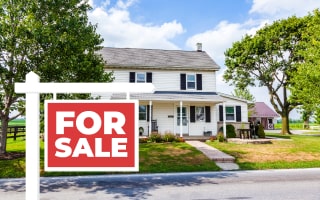
It takes an average of 80 days to sell a house in Pennsylvania, including approximately 37 days to accept an offer and about 35 days to close the sale. The current DOM in the state typically reflects its status as a seller's market, as home supply is a little tight and buyers remain active.
Several factors may influence home sale timelines in the Keystone State. These typically include the time of the year, economic and real estate conditions (job market, home size, home price trends, demand, and supply, among others), the condition of the property, and the property type. Typically, homes in top condition located in desirable metro areas or cities with strong local economies tend to sell faster. Additionally, certain features — like the ones listed below — can make a home highly competitive, leading to a potentially faster sale.
-
![]() Bedrooms: Homes with 3-4 bedrooms with at least two bathrooms tend to sell fastest in Pennsylvania. These homes generally offer more practicality and convenience, driven by high demand from couples, families, and others seeking more space. In Pennsylvania, these homes are common in Philadelphia and Pittsburgh.
Bedrooms: Homes with 3-4 bedrooms with at least two bathrooms tend to sell fastest in Pennsylvania. These homes generally offer more practicality and convenience, driven by high demand from couples, families, and others seeking more space. In Pennsylvania, these homes are common in Philadelphia and Pittsburgh.
-
![]() Size and Lot: Most buyers in the Keystone State look to purchase smaller homes sitting on medium lot sizes. Generally, houses spanning about 1,500 to 2,000 square feet on lot sizes between 0.25 and 0.5 acres tend to sell faster, especially if they're well maintained and require minimal or no repairs.
Size and Lot: Most buyers in the Keystone State look to purchase smaller homes sitting on medium lot sizes. Generally, houses spanning about 1,500 to 2,000 square feet on lot sizes between 0.25 and 0.5 acres tend to sell faster, especially if they're well maintained and require minimal or no repairs.
-
![]() Style: While the Pennsylvania housing market consists of many of the same practical home styles, Colonial-style homes generally sell faster in the Commonwealth. These homes have functional living spaces and generally feature minimalist designs. Victorian- and ranch-style homes are also popular in Pennsylvania — ranking the second and third fastest-selling home styles — followed by Cape Cods and contemporary homes.
Style: While the Pennsylvania housing market consists of many of the same practical home styles, Colonial-style homes generally sell faster in the Commonwealth. These homes have functional living spaces and generally feature minimalist designs. Victorian- and ranch-style homes are also popular in Pennsylvania — ranking the second and third fastest-selling home styles — followed by Cape Cods and contemporary homes.
-
![]() Modern Upgrades: Modern upgrades to a home will generally create an initial impression on any buyer and may ultimately help the home sell faster. In Pennsylvania, homes with open-concept kitchens, hardwood floors, energy-efficient appliances, sleek light fixtures, freshly painted interior walls and exterior doors, updated bathrooms, vinyl windows, and aesthetic landscapes typically sell fastest.
Modern Upgrades: Modern upgrades to a home will generally create an initial impression on any buyer and may ultimately help the home sell faster. In Pennsylvania, homes with open-concept kitchens, hardwood floors, energy-efficient appliances, sleek light fixtures, freshly painted interior walls and exterior doors, updated bathrooms, vinyl windows, and aesthetic landscapes typically sell fastest.


What Should Home Sellers Know About Zoning Laws, Permits, and Regulatory Requirements in Pennsylvania?

Understanding the local zoning laws in Pennsylvania is crucial for those looking to invest in real estate development in the Keystone State, as it may directly impact their ROI. Besides aiding in the development of a particular area, certain zoning laws play an important role in determining property values and ensuring the property meets the needs of potential buyers. Different zoning classifications permitted on land in Pennsylvania typically determine what can be built and where.
As a real estate developer in Pennsylvania, failing to comply with local zoning laws and permits may lead to development delays, fines, and sometimes, legal issues. Potential buyers often request to see (and verify) a local zoning compliance document before purchasing a property to ensure it meets zoning regulations and is free from any legal problems.
Home sellers in Pennsylvania must clearly understand the following to avoid surprises and protect their investment:
- Areas with Strict Zoning Laws: Areas with strict zoning laws in Pennsylvania include Scranton, Radnor, Philadelphia, Haverford, and Hazleton.
- Areas with Less Bureaucratic Zoning Laws: Some municipalities in the rural and less populated areas in Pennsylvania — particularly in the Marcellus Shale region — don't have a single set of zoning laws. In these municipalities, it's important to contact the planning departments to help clarify any restrictions that may apply to real estate development projects.
- Areas Requiring Special Permits: In addition to zoning permits, some cities in Pennsylvania require investors looking to develop a property to obtain certain special permits, typically through a public hearing and approval from the zoning hearing board. For instance, in Chester City, after a zoning permit application is approved, a would-be developer must apply for a building permit. Similarly, a building permit is required in certain instances in the City of Philadelphia.
- Areas Requiring a Certificate of Occupancy Before Occupation: Generally, a certificate of occupancy (CO) is required for sales, changes in use, and major renovations to Pennsylvania properties. In some places, like the City of Philadelphia, a separate CO is needed to occupy each building on a property.
- Areas Requiring Approval From a Historic Commission: Certain places in Pennsylvania, including the City of Philadelphia, require anyone modifying historic properties or buildings to obtain approval from the Historic Commission. In other cases, an approval may be needed before using certain materials to build or renovate a structure to preserve the historic heritage of these neighborhoods.
Which Towns or Cities in Pennsylvania Are the Easiest — and Hardest — When It Comes to Navigating Real Estate Regulations?

Generally, real estate regulations exist to maintain the integrity of the real estate market, promote safety, and protect the rights of home sellers, buyers, tenants, landlords, and developers. Compliance with local real estate regulations in Pennsylvania is critical to helping avoid legal issues or disputes. These regulations may include local laws governing land use, property transactions, and construction.
Furthermore, adhering to local real estate regulations in the Commonwealth can help investors protect their business reputation and maximize property value. The real estate regulatory environment in different parts of the state may vary with strict regulations in some localities and more relaxed laws in other places.
Development-Friendly Areas

Areas with development-friendly real estate regulations often attract developers and other real estate investors. Such localities have various housing options and strong rental demand, making them excellent grounds for real estate investment. The following areas in Pennsylvania are generally known to have development-friendly laws and real estate regulations:
- Pittsburgh: The flexible zoning and development regulations are generally designed to encourage developers to build a mix of varying house types.
- Lancaster: Even though the city's development regulations focus on preserving its historic nature, they still support adaptive reuse projects and new construction.
- Philadelphia: The city's persistent efforts in streamlining its zoning and permitting process generally encourage real estate development.
- Chesterbrook: While Chesterbrook's development regulations are mostly designed to keep the city's unique character, they still permit certain new development to encourage real estate investors.
- Allentown: Both commercial and residential property growth are supported by the town's development-friendly regulations.
Moderately Regulated Areas
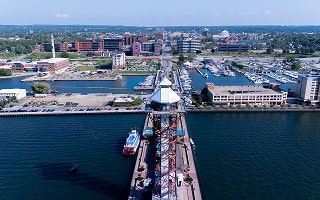
Although these areas generally offer some regulatory controls for real estate development, they have relatively flexible zoning and a straightforward permitting process in place to foster development. Real estate regulations in the following Pennsylvania cities and towns are not overly restrictive for real estate developers:
- Erie: The city has some incentives in place for redevelopment, and the zoning is fairly reasonable.
- Cranberry Township (Butler County): Although the zoning in Cranberry Township is relatively strict, it offers real estate developers an efficient permitting process.
- York: This city has moderate zoning codes and encourages downtown revitalization and adaptive reuse.
Highly Restrictive or Bureaucratic Areas
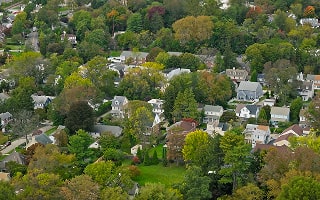
When it comes to navigating real estate regulations, these localities are known for their complex permitting processes, heavy regulatory oversight, deep politics, and strict, restrictive zoning codes. These factors generally make real estate investing more difficult in the following Pennsylvania municipalities:
- Haverford Township: The zoning process is highly bureaucratic and often faces active neighborhood opposition (NIMBY*), particularly to new commercial or residential development.
- Swarthmore Borough: Swarthmore Borough: Permitting and zoning changes are rare here because the local government maintains highly restrictive land-use policies designed to limit new development.
- Radnor Township: In addition to strict zoning, this town has a strong resident opposition to dense projects.
- Lower Merion Township: This town has one of the most complex design standards, zoning, and historic overlays in Pennsylvania, and the environment rarely supports new multifamily housing.
Regulatory Climate Factors to Watch
The real estate regulatory climate in Pennsylvania is influenced by several factors, which may include local zoning policies, land regulations, economic development priorities, permitting processes, and statewide laws. Such factors may determine how difficult or easy it is to renovate or develop property. Understanding these factors is crucial in helping both investors and developers navigate real estate regulations in each locality within the Keystone State.
The table below lists some regulatory climate factors to watch in Pennsylvania, and the municipalities where they're often found:
| Factor | Impact on Development | Where It's Found |
|---|---|---|
| Zoning Flexibility | Determines ease of land use | Reading, Allentown, Harrisburg, Lancaster, Philadelphia, and Pittsburgh |
| Historic Preservation Laws | Adds restrictions | New Hope, York, Doylestown, Bethlehem, Philadelphia, Lancaster, and Pittsburgh |
| Wetlands/Conservation | Limits buildable land | Lower Merion Township, Radnor Township, East Bradford Township, Tredyffrin Township, and Lower Makefield Township |
| Inclusionary Zoning | Requires affordable units | Philadelphia, Pittsburgh, West Chester Borough, Lower Merion Township, Bethlehem, and State College |
| Building Code Enforcement | Affects cost/speed | Allentown, Erie, Pittsburgh, Lancaster, Bethel Park, Radnor Township, and Scranton |
| Local Politics/NIMBYism | Blocks or delays projects | Haverford Township, Mount Lebanon, West Vincent Township, Bethlehem (North Side), Upper Makefield Township, Radnor Township, Abington Township, and Springfield Township |
*NIMBYism - Not in My Backyard
What Are the Most Effective Flipping and Resale Strategies for Maximizing Profit in Pennsylvania's Housing Market?
Flipping in real estate involves purchasing properties with the intent to renovate, list, and resell them. It's generally a strategy adopted by real estate investors to sell homes quickly for a solid profit. In Pennsylvania, where the housing market is a mix of rural, urban, and suburban markets, flipping and reselling homes can be very profitable if done strategically using the strategies listed below:
-
![]() Targeting Distressed or Foreclosed Homes: Areas with more distressed properties and foreclosures are some of the best places to flip and resell houses for maximum profit. In Pennsylvania, such places include Delaware County, Bucks County, Allegheny County, Philadelphia County, York County, and Dauphin County. Typically, distressed properties are offered at steep discounts, presenting experienced flippers with the opportunity to make substantial profits after renovation.
Targeting Distressed or Foreclosed Homes: Areas with more distressed properties and foreclosures are some of the best places to flip and resell houses for maximum profit. In Pennsylvania, such places include Delaware County, Bucks County, Allegheny County, Philadelphia County, York County, and Dauphin County. Typically, distressed properties are offered at steep discounts, presenting experienced flippers with the opportunity to make substantial profits after renovation.
-
![]() Using the 70% Rule: The 70% rule states that an investor should pay no more than 70% of the after-repair-value (ARV) minus the repair costs. This can help investors maximize profit, even when there are unexpected expenses.
Using the 70% Rule: The 70% rule states that an investor should pay no more than 70% of the after-repair-value (ARV) minus the repair costs. This can help investors maximize profit, even when there are unexpected expenses.
-
![]() Wholetailing for Speed: Focusing on minor cosmetic renovations like fixing the bathrooms and toilets, prioritizing curb appeal, painting, and doing new flooring generally limits permitting needs and increases a home's appeal to first-time buyers. This costs very little money and largely works in areas like Erie, Reading, Levittown, Scranton, and Norristown.
Wholetailing for Speed: Focusing on minor cosmetic renovations like fixing the bathrooms and toilets, prioritizing curb appeal, painting, and doing new flooring generally limits permitting needs and increases a home's appeal to first-time buyers. This costs very little money and largely works in areas like Erie, Reading, Levittown, Scranton, and Norristown.
-
![]() Building Strong Deal Pipelines with Lead Gen: Building strong deal pipelines with lead generation is one of the most scalable real estate flipping strategies, as it may help reduce property acquisition costs and help investors maximize ROI. This strategy involves building relationships with local wholesalers, probate attorneys, real estate agents, and contractors in charge of distressed homes, as well as targeting homeowners with offers that solve their pain points. In Pennsylvania, competitive real estate markets, like Allentown, Harrisburg, Philadelphia, and Reading, are places where investors may adopt this strategy to maximize profit.
Building Strong Deal Pipelines with Lead Gen: Building strong deal pipelines with lead generation is one of the most scalable real estate flipping strategies, as it may help reduce property acquisition costs and help investors maximize ROI. This strategy involves building relationships with local wholesalers, probate attorneys, real estate agents, and contractors in charge of distressed homes, as well as targeting homeowners with offers that solve their pain points. In Pennsylvania, competitive real estate markets, like Allentown, Harrisburg, Philadelphia, and Reading, are places where investors may adopt this strategy to maximize profit.
-
![]() Buy, Rehab, Rent, Refinance, Repeat Method (BRRRR): This works best in areas with high rental demand. It involves purchasing and renovating properties in landlord-friendly locations, then offering them for sale to investors seeking long-term, cash-flowing housing units. In Pennsylvania, this strategy works effectively in municipalities like Reading (multi-units), Altoona, Pittsburgh (Beltzhoover and South Side), and the City of Lancaster.
Buy, Rehab, Rent, Refinance, Repeat Method (BRRRR): This works best in areas with high rental demand. It involves purchasing and renovating properties in landlord-friendly locations, then offering them for sale to investors seeking long-term, cash-flowing housing units. In Pennsylvania, this strategy works effectively in municipalities like Reading (multi-units), Altoona, Pittsburgh (Beltzhoover and South Side), and the City of Lancaster.
-
![]() Creative Financing and Seller Financing: Pennsylvania municipalities like Chester, York, and Reading — where there are distressed properties but minimal buyer competition, and where there are many older homeowners with equity — are places where investors may adopt this strategy to maximize profit. It involves negotiating directly with property owners to finance all or part of the purchase. Typically, no bank is involved in the transaction. The seller primarily carries the loan, while the buyer pays the loan in installments.
Creative Financing and Seller Financing: Pennsylvania municipalities like Chester, York, and Reading — where there are distressed properties but minimal buyer competition, and where there are many older homeowners with equity — are places where investors may adopt this strategy to maximize profit. It involves negotiating directly with property owners to finance all or part of the purchase. Typically, no bank is involved in the transaction. The seller primarily carries the loan, while the buyer pays the loan in installments.
-
![]() Tax Lien or Tax Deed Investing: These offer great investment and flipping opportunities. They involve purchasing properties below market value by carefully targeting their owners who have failed in their obligation to pay property taxes. This strategy works best in Pennsylvania municipalities with active judicial sales and a high number of tax-delinquent properties, such as Erie, Cambria, York, Berks, and Philadelphia.
Tax Lien or Tax Deed Investing: These offer great investment and flipping opportunities. They involve purchasing properties below market value by carefully targeting their owners who have failed in their obligation to pay property taxes. This strategy works best in Pennsylvania municipalities with active judicial sales and a high number of tax-delinquent properties, such as Erie, Cambria, York, Berks, and Philadelphia.
-
![]() FHA 203(k) Buyer Targeting: The FHA 203(k) is a government-backed mortgage that enables owner-occupant buyers to finance both a home purchase and the costs of renovation in a single loan. Investors may target FHA 203(k) buyers in Pennsylvania cities like Reading, Scranton, Harrisburg, and Philadelphia, where old housing stock is ripe for rehabbing. Investors can purchase these properties, then prep them by listing the home in a way that allows buyers to complete the work. This typically helps avoid full-scale renovations and saves more money.
FHA 203(k) Buyer Targeting: The FHA 203(k) is a government-backed mortgage that enables owner-occupant buyers to finance both a home purchase and the costs of renovation in a single loan. Investors may target FHA 203(k) buyers in Pennsylvania cities like Reading, Scranton, Harrisburg, and Philadelphia, where old housing stock is ripe for rehabbing. Investors can purchase these properties, then prep them by listing the home in a way that allows buyers to complete the work. This typically helps avoid full-scale renovations and saves more money.
-
![]() Staging and Strategic Pricing: Hiring a local real estate agent who is skilled in working with investor flips is a great strategy that can help maximize profits on real estate investments. Experienced agents understand their local market, including the home features that appeal to local buyers. They also know how to create urgency, as well as justify the asking price of any property. In Pennsylvania, this strategy may be highly effective in housing markets with many first-time buyers, like York, Reading, and Scranton, as well as in hot urban markets like Pittsburgh and Philadelphia.
Staging and Strategic Pricing: Hiring a local real estate agent who is skilled in working with investor flips is a great strategy that can help maximize profits on real estate investments. Experienced agents understand their local market, including the home features that appeal to local buyers. They also know how to create urgency, as well as justify the asking price of any property. In Pennsylvania, this strategy may be highly effective in housing markets with many first-time buyers, like York, Reading, and Scranton, as well as in hot urban markets like Pittsburgh and Philadelphia.


How Should Sellers Price Their Homes to Attract Buyers While Maximizing Value in Pennsylvania?

One of the most important decisions to make when selling a home is setting a price that will appeal to potential buyers while still maximizing profit. Generally, in real estate, pricing strategies adopted can either make or break a deal. That's why working with a real estate agent or appraiser in Pennsylvania is highly recommended.
Licensed appraisers and local real estate agents understand the local real estate landscape and generally know how to tailor pricing to buyer financing and behavior. In addition, they understand how to set the right prices by using market trends to analyze pending, active, and sold comparable properties in the same locality within the last 90 days.
Sellers may be able to set the appropriate prices to attract serious buyers while still getting the best return on investment in Pennsylvania using one of the following pricing strategies:
-
![]() Pricing Just Below Market Thresholds: Setting a home price just below a major price threshold to drive traffic of buyers who set a maximum budget for themselves. For instance, pricing a property at $149,500 ensures it appears in any search by potential buyers who have set a maximum budget of $150,000. In Pennsylvania, this strategy works best in municipalities where the housing market is price-sensitive and has several FHA buyers. These include Lancaster, Allentown, York, Scranton, Pittsburgh, and Philadelphia.
Pricing Just Below Market Thresholds: Setting a home price just below a major price threshold to drive traffic of buyers who set a maximum budget for themselves. For instance, pricing a property at $149,500 ensures it appears in any search by potential buyers who have set a maximum budget of $150,000. In Pennsylvania, this strategy works best in municipalities where the housing market is price-sensitive and has several FHA buyers. These include Lancaster, Allentown, York, Scranton, Pittsburgh, and Philadelphia.
-
![]() Charm Pricing (Psychological Pricing): This works by making a home price appear more attractive to buyers by leveraging their psychology. In price-sensitive, suburban, and entry-level buyer markets in Pennsylvania municipalities — such as York, Mechanicsburg, Bethlehem, Allentown, and Pittsburgh — charm pricing is a proven tactic in real estate pricing. For instance, pricing a home at $199,900 instead of $200,000 can make the listing stand out in the housing market and make it appear like a great deal despite the small difference.
Charm Pricing (Psychological Pricing): This works by making a home price appear more attractive to buyers by leveraging their psychology. In price-sensitive, suburban, and entry-level buyer markets in Pennsylvania municipalities — such as York, Mechanicsburg, Bethlehem, Allentown, and Pittsburgh — charm pricing is a proven tactic in real estate pricing. For instance, pricing a home at $199,900 instead of $200,000 can make the listing stand out in the housing market and make it appear like a great deal despite the small difference.
-
![]() Pricing to Create a Bidding War: Pricing to create a bidding war works in a competitive housing market, particularly where buyer demand is strong but inventory is limited. In Pennsylvania, this includes municipalities like Philadelphia, State College, Pittsburgh, and Lehigh Valley (Easton, Allentown, Bethlehem). The strategy works by lowering prices to prompt more emotional urgency and maximize interest, which may lead to a multiple-offer situation that can drive up the sale price.
Pricing to Create a Bidding War: Pricing to create a bidding war works in a competitive housing market, particularly where buyer demand is strong but inventory is limited. In Pennsylvania, this includes municipalities like Philadelphia, State College, Pittsburgh, and Lehigh Valley (Easton, Allentown, Bethlehem). The strategy works by lowering prices to prompt more emotional urgency and maximize interest, which may lead to a multiple-offer situation that can drive up the sale price.
-
![]() High-Anchor Pricing (Test the Waters): Sometimes, pricing a property at the top of the market range for comparable properties can be appropriate to test buyer interest while leaving room for negotiation. Although this strategy comes with notable risks in slower and/or price-sensitive markets, it's proven to work well in high-end environments with hot, low-inventory housing markets. In Pennsylvania, such markets exist in municipalities like New Hope, Haverford, West Chester, Sewickley, and some parts of South Side Pittsburgh.
High-Anchor Pricing (Test the Waters): Sometimes, pricing a property at the top of the market range for comparable properties can be appropriate to test buyer interest while leaving room for negotiation. Although this strategy comes with notable risks in slower and/or price-sensitive markets, it's proven to work well in high-end environments with hot, low-inventory housing markets. In Pennsylvania, such markets exist in municipalities like New Hope, Haverford, West Chester, Sewickley, and some parts of South Side Pittsburgh.
-
![]() Price-Per-Square-Foot Benchmarking: This pricing strategy involves comparing similarly sized properties when setting a price and is commonly used by real estate investors and flippers in markets where appraisers or buyers rely on quantitative pricing cues. In Pennsylvania, such markets generally include areas with dense and cookie-cutter subdivision housing, including Port Richmond, South Philadelphia, Lawrenceville, and Easton.
Price-Per-Square-Foot Benchmarking: This pricing strategy involves comparing similarly sized properties when setting a price and is commonly used by real estate investors and flippers in markets where appraisers or buyers rely on quantitative pricing cues. In Pennsylvania, such markets generally include areas with dense and cookie-cutter subdivision housing, including Port Richmond, South Philadelphia, Lawrenceville, and Easton.
-
![]() Appraisal-Backed Pricing: With this pricing strategy, a home price is set to align directly with the price at which any certified appraiser will value the property. In Pennsylvania, the strategy is effective in housing markets where buyers largely rely on government-backed financing (like VA or FHA loans), which includes municipalities like Erie, Altoona, Lebanon, Camp Hill, and Lancaster suburbs.
Appraisal-Backed Pricing: With this pricing strategy, a home price is set to align directly with the price at which any certified appraiser will value the property. In Pennsylvania, the strategy is effective in housing markets where buyers largely rely on government-backed financing (like VA or FHA loans), which includes municipalities like Erie, Altoona, Lebanon, Camp Hill, and Lancaster suburbs.
-
![]() Net-to-Seller Pricing: This pricing strategy ensures the seller gets a specific net profit after all expenses — which may include fees, commissions, and taxes — by minimizing surprises from price negotiations and closing costs. It's generally effective in Pennsylvania municipalities with high closing costs (local taxes and transfer taxes) and competitive pricing, like Philadelphia, Johnston, Erie, and Pittsburgh (Carrick and East Liberty).
Net-to-Seller Pricing: This pricing strategy ensures the seller gets a specific net profit after all expenses — which may include fees, commissions, and taxes — by minimizing surprises from price negotiations and closing costs. It's generally effective in Pennsylvania municipalities with high closing costs (local taxes and transfer taxes) and competitive pricing, like Philadelphia, Johnston, Erie, and Pittsburgh (Carrick and East Liberty).
-
![]() Urgency Pricing (Motivated Seller Strategy): Home sellers can list a property significantly below market value to drive instant buyer interest and generate multiple offers. This strategy typically works in divorce sales, relocation sales, and distressed property sales. It may be effective in Pennsylvania municipalities like Germantown, the City of Lancaster, and Garfield, where there's high demand for under-market deals and the entry-level markets are competitive with plenty of cash buyers.
Urgency Pricing (Motivated Seller Strategy): Home sellers can list a property significantly below market value to drive instant buyer interest and generate multiple offers. This strategy typically works in divorce sales, relocation sales, and distressed property sales. It may be effective in Pennsylvania municipalities like Germantown, the City of Lancaster, and Garfield, where there's high demand for under-market deals and the entry-level markets are competitive with plenty of cash buyers.


To attract buyers and maximize value in Pennsylvania, sellers can adopt the relevant pricing strategy that works best in their locality, considering the prevailing market conditions at the time of the sale:
| Market Condition | Best Strategy |
|---|---|
| Seller's Market | Underpricing for a bidding war |
| Buyer's Market | Charm pricing or net-to-seller |
| Unique, luxury home | High-anchor + value justification |
| Entry-level home | Just-below threshold |
| Urgent sale needed | Aggressive urgency pricing |
| Flipper or investor listing | Appraisal-backed or price-per-square-foot benchmarking |
Which Key Economic, Social, and Regulatory Factors Are Driving Current Trends in Pennsylvania's Local Property Markets?

Certain factors significantly impact the trends of real estate markets and, in particular, local market dynamics (demand and supply) in Pennsylvania. These factors, which are listed below, vary by area and are largely responsible for shaping the Pennsylvania local property markets:
![]() Economic Factors
Economic Factors
 Economic Factors
Economic resilience and jobs and wage growth in places like Bethlehem, Carlisle, and Easton, are responsible for increased housing demand. On the other hand, buyer activity is slow in some parts of Philadelphia, Scranton, and Reading as a result of high-interest rates.
![]() Demographic and Social Factors
Demographic and Social Factors
 Demographic and Social Factors
In Pennsylvania counties like Delaware, Lancaster, and Bucks, the aging population has driven up demand for 55-plus communities and increased turnover in older single-family housing stock. Many seniors are currently relocating to smaller homes in these areas. As a result of urban revitalization, low-income earners are at risk of displacement in places like Harrisburg, Philadelphia, and Pittsburgh.
![]() Regulatory and Legal Framework
Regulatory and Legal Framework
 Regulatory and Legal Framework
Areas like Beaver, Montgomery, Chester, Westmoreland, and Bucks counties are experiencing rising home prices and constrained housing supply due to low permit activity and restrictive zoning.
![]() Taxation and Fiscal Policy
Taxation and Fiscal Policy
In places like Erie, Lehigh Valley, and Luzerne County, accelerated residential and commercial real estate investments are being encouraged by tax incentives. Similarly, Allentown, Pittsburgh, and Philadelphia offer some form of partial tax relief that encourages developer interest and stimulates new construction.
![]() Housing Policy and Government Programs
Housing Policy and Government Programs
The Low-Income Housing Tax Credit program helps drive up the supply of income-restricted housing in Pennsylvania municipalities like Lancaster, Philadelphia, Chester, and Allentown. In addition, the Pennsylvania Housing Finance Agency generally offers low- to moderate-income families in York, Pittsburgh, and Scranton increased access to homeownership opportunities and helps stabilize neighborhoods through its rehab and financing programs.
![]() Infrastructure and Development Trends
Infrastructure and Development Trends
 Infrastructure and Development Trends
Local property markets are greatly influenced by certain infrastructure and development factors like energy and transportation. For instance, the ongoing Schuylkill Yards development is beginning to cause an increase in property values in Philadelphia.
Although inventory is improving in certain local markets, the Pennsylvania housing market continues to grapple with limited home supply in some urban areas. However, home prices are generally stabilizing, with more buyers moving to small towns and suburbs for space and affordability. Municipalities with the best return on investment for home sellers and developers include Pittsburgh, Harrisburg, Philadelphia, Scranton, and York.
While zoning laws in some Pennsylvania municipalities are flexible, they're highly restrictive in others. Areas with flexible zoning, such as Lancaster and Philadelphia, allow multifamily conversions and are more open to redevelopment. On the other hand, new development is limited in places like Bucks, Montgomery, and Chester counties due to more restrictive zoning.
In Pennsylvania, homes with 3-4 bedrooms and at least 2 bathrooms — particularly those with garages — remain the most in-demand across urban and suburban housing markets. Updated single-family homes are also in high demand because they're typically move-in ready and feature modern bathrooms and kitchens. Housing demand in affordable regions of Pennsylvania continues to drive steady housing market growth across the Keystone State.
Table of Contents
- Pennsylvania Home Selling
- Which Areas in Pennsylvania Offer the Best Return on Investment and Are Easiest for Residential
- What Home Styles, Sizes, and Features Tend to Sell Fastest in the Pennsylvania Market?
- What Should Home Sellers Know About Zoning Laws, Permits, and Regulatory Requirements in Pennsylvania?
- Which Towns or Cities in Pennsylvania Are the Easiest â and Hardest â When It Comes to Navigating Real Estate Regulations?
- What Are the Most Effective Flipping and Resale Strategies for Maximizing Profit in Pennsylvania's Housing Market?
- How Should Sellers Price Their Homes to Attract Buyers While Maximizing Value in Pennsylvania?
- Which Key Economic, Social, and Regulatory Factors Are Driving Current Trends in Pennsylvania's Local Property Markets?