How To Search for Pittsburgh Property Records

Always conduct due diligence before investing in real estate. You can use property records to do your research. They contain information on ownership history, property values, taxes, liens, amenities, house type, foreclosures, zoning rules, and other crucial details that can help you make informed decisions. Pittsburgh property records are publicly available to anyone who wants to view or copy them. The key is knowing where to look. Below, we have detailed useful resources available to help you find specific Pittsburgh property records for various purposes.
Allegheny County Office of Property Assessments
The Allegheny County Office of Property Assessments is responsible for assessing the value of all real property in the City of Pittsburgh for tax purposes. This office is a key resource for a wide range of property records, including ownership information, valuation histories, property classifications and characteristics, sales histories, and tax data. You can use the county's Real Estate Portal to look up this information online. Basic searches can be done by address or parcel ID at no cost, with the option of subscribing to additional services like name-based searches, retrieving the legal description of parcels, and accessing more detailed tax information. You can also visit the office at the County Office Building, Room 347, 542 Forbes Avenue, Pittsburgh, PA 15219, to request hard copies of these records (fees apply) or call them at (412) 350-4636, option 2, for general information and inquiries.
Allegheny County Division of Real Estate

The Allegheny County Division of Real Estate (which functions as the county's Recorder of Deeds) maintains official copies of records relating to property ownership in Pittsburgh. These documents include deeds, mortgages, mortgage satisfactions, liens, plats, easements, and more. The division offers a Land Records Search tool that you can use to look up and request copies of these records. Searches can be done by name, document, block and map, parcel ID, and other options. You may need to pay a subscription or fee to download images of documents, though a free index search is available. You can also visit the division at the County Office Building, Room 101, 542 Forbes Avenue, Pittsburgh, PA 15219, to access these records in person or call them at (412) 350-4226 for general inquiries.
Allegheny County Treasurer's Office
The Allegheny County Treasurer's Office handles property tax collection in Pittsburgh, making it an excellent resource for tax-related property records, like payment histories, current amount due, delinquent tax status, and filed tax liens. Most of this information can be searched online through the county's Real Estate Portal (subscription may be required to access some details). You can also contact the office directly at 436 Grant Street, Pittsburgh, PA 15219, to access this information or call them at (412) 350-4100 for general inquiries.
Allegheny County Courts
The Allegheny County Courts are also great resources for information on foreclosures, liens, title disputes, landlord/tenant matters, and other similar records tied to legal actions. You can access some of this information at no cost using the Pennsylvania Judiciary Web Portal. For information that is not available online, or to get certified copies of records, you can contact the Allegheny County Prothonotary at the Allegheny County Courthouse, Room 114, 436 Grant Street, Pittsburgh, PA 15219. Note that fees may apply. You can call (412) 350-4200 for more information.
Pittsburgh Finance Department

The Pittsburgh Finance Department maintains the official financial records for every property within Pittsburgh, detailing both what is owed to and paid to the city. This department manages the city's portion of property taxes, making it an excellent resource for information related to municipal-level tax obligations. This includes the current amount due to the city, delinquent status for city taxes, and any city-level tax liens. You can visit the finance department's office on the 2nd Floor, 414 Grant Street, Pittsburgh, PA 15219, to access this information in person. You may also call them at (412) 255-2525 for general information and inquiries.
Pittsburgh Property Taxes
Pittsburgh property taxes are a crucial funding source for essential local government services, including public schools, police and fire departments, 911 dispatch, libraries, parks, and road maintenance. The Allegheny County Office of Property Assessments determines the market value of property in the city, while the Allegheny County Treasurer's Office oversees tax collection. A property's assessed value is determined using a "base year" system, which sets the value equal to the property's market value as of the county's last complete reassessment.
The county's current base year is 2012, meaning that all property values used for tax purposes are based on what those properties were worth as of January 1, 2012. These values were first applied to the 2013 tax year and have continued to be used for all tax years since. Assessed values do not automatically rise annually to match market changes; they are reassessed only when there are physical changes (like new construction or demolition) or to correct errors. Taxes are calculated by multiplying the assessed value by the combined millage rates of the County, the City of Pittsburgh, and the Pittsburgh School District.
Property tax bills are usually sent out separately by each taxing authority (county, city, and school district). County tax bills are typically mailed out in February, with payments due by May 31st. Homeowners who pay their taxes in full by April 30th typically qualify for a 2% discount. Taxes are considered delinquent from June 1st, and you'll be charged a one-time 5% penalty on the total amount owed, plus 1% interest for each month the payment is overdue. City and school district taxes are billed together, with notices sent out in January. A 2% discount is also available for payments made by February 10, and taxpayers may opt for a three-part installment plan with payments due on the last day of February, April 30th, and July 31st. Interest begins accruing on March 1st if the first installment is missed.
There are several ways to pay your property taxes in Pittsburgh, including online (via e-check or credit/debit card), by mail, and in person. You can call the Allegheny County Treasurer's Office at (412) 350-4100 and the Pittsburgh Finance Department at (412) 255-2525 for more information.
![]() Assessments
Assessments

The Allegheny County Office of Property Assessments assesses all properties in Pittsburgh to determine their value for tax purposes. The county uses a base-year system, where each property's assessed value reflects its market value as of January 1, 2012. This means that even though property data is reviewed annually, assessed values generally remain unchanged unless there is a physical change to the property, such as new construction, demolition, or significant renovations, or if an error needs to be corrected.
Tax statements are typically mailed to property owners around the start of the year. These statements include the property's current assessed value (the basis for tax calculations) and the millage rates of the three taxing bodies (county, city, and school district). If you believe your property value was calculated incorrectly, you may file an appeal with the Allegheny County Board of Property Assessment Appeals and Review (BPAAR). The annual appeal filing period is usually between July and September, though specific timelines may vary each year. The office of property assessments typically provides forms before the appeal period. You can call the office at (412) 350-4636, option 2, for more information or assistance with filing an appeal.
![]() Appraisals
Appraisals

Pittsburgh assessments work similarly to appraisals. They both determine the fair market value of property by comparing it with similar properties that have sold recently in the local area. In cases of odd structures or new construction, the county may call upon an appraiser to help determine the value. Estate planners, courts, and lenders also use appraisals to value real property.
![]() Tax Rates
Tax Rates

Pittsburgh, Pennsylvania, has a median effective tax rate of 2.30%, which is significantly higher than the national median of 1.02% but lower than Pennsylvania's state median of 2.81%. The average annual tax bill in the city is $2,505, slightly higher than the national average of $2,400.
Here's a look at how Pittsburgh's tax rate compares to other counties in Pennsylvania:
- Blair County 1.57%
- Chester County 3.50%
- Dauphin County 2.88%
- Elk County 3.06%
- Erie County 2.59%
- Huntingdon County 5.91%
- Lehigh County 2.78%
- Mifflin County 2.92%
- Montgomery County 3.94%
- Philadelphia County 1.20%
- Potter County 6.53%
- Susquehanna County 3.31%
- Tioga County 2.81%
- York County 3.29%
![]() Exemptions
Exemptions

Property tax obligations in Pittsburgh can be a financial strain for some residents. Thankfully, Allegheny County offers several tax relief programs to reduce the tax burden for eligible homeowners. These include:
- Senior Citizen Tax Relief (Act 77): This entitles senior citizens and certain disabled homeowners to a flat 30% discount on the property tax on their primary residence, with a maximum reduction of $650 per year.
- Homestead/Farmstead Exclusion (Act 50): This reduces the assessed value of a homeowner's primary residence.
- Disabled Veteran Real Estate Tax Exemption: This provides a full property tax exemption for qualified disabled veterans or their surviving spouses who demonstrate a financial need.
You can contact the Allegheny County Treasurer's Office at (412) 350-4100 and the Office of Property Assessments at (412) 350-4636, option 2, for more details on available tax relief programs and assistance with applying.
Pittsburgh Building Permits/Inspections
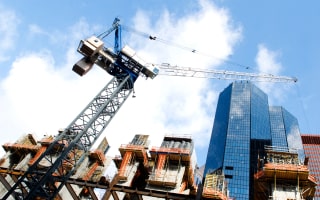
You need to get a permit before starting any new construction, renovating an existing building, or demolishing one. Exceptions may be made for minor work, such as painting, carpeting, and building fences less than six feet high. The Pittsburgh Department of Permits, Licenses, and Inspections (PLI) issues these permits and oversees the city's overall building and construction process. You can use the department's OneStopPGH portal to apply for permits, track your application, and schedule inspections online. If you prefer in-person services, you can visit the OneStopPGH Counter at 412 Boulevard of the Allies, Pittsburgh, PA 15219. Note that you will need to make an appointment before your visit. You can also call (412) 255-2175 for inquiries.
The types of permits issued in Pittsburgh include:
- Building Permits: For constructing or modifying residential and commercial structures.
- Demolition Permits: For tearing down existing structures.
- Land Operations Permits: For grading, excavation, or filling activities.
- Electrical Permits: For installing, replacing, or repairing electrical systems (wiring, panels, and electrical connections).
- Fire Alarm Permits: For installing or upgrading fire detection systems.
- Fire Suppression Permits: For work involving fire sprinkler and extinguishing systems.
- Mechanical Permits: For installing, replacing, or repairing heating, ventilation, air conditioning, and fuel gas systems.
- Plumbing Permits: For installing and repairing water, sewer, and drainage systems (these permits are issued by the Allegheny County Health Department's Plumbing Division).
When applying for any of these permits, you must submit the proper documentation (building plans, blueprints, contractor licenses, materials lists, etc.). You must also pay the appropriate fee.
Building inspections are part of the permit process, and they ensure that the work complies with local building and safety codes. You can schedule an inspection through the online portal or in person at the office during regular business hours.
Real Estate in the City of Pittsburgh
Once a major player in the steel industry, Pittsburgh successfully transformed its economy and is now known for its tech, education, and healthcare industries. The city is home to some of the most celebrated sports teams in the country, including the six-time Super Bowl champion Pittsburgh Steelers and the five-time World Series-winning Pittsburgh Pirates. It also boasts more bridges than any other city in the world (446 in total), earning it the title "City of Bridges".
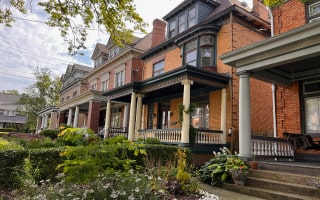
Pittsburgh, Pennsylvania, has a population of 302,971 residents and 167,913 housing units. Of these, 85% are occupied and 49% are owner-occupied. The city features a diverse range of housing options, including single-family homes, rowhouses, duplexes, apartment buildings, condos, and mixed-use buildings. Common housing styles include Queen Anne, Romanesque Revival, Craftsman, Colonial Revival, and the distinct Pittsburgh "two-story box" or "shotgun" house. The average price of a home in Pittsburgh, PA, is $236,638, which is around 0.3% up from previous years. However, actual home values can vary significantly by neighborhood. Here are examples of home prices in different Pittsburgh neighborhoods:
- Bloomfield $303,474
- Central Lawrenceville $360,348
- Herrs Island $688,168
- North Oakland $294,409
- Polish Hill $221,424
- Upper Hill $131,789
The Pittsburgh, Pennsylvania, real estate market is a somewhat competitive, seller-leaning market. Home values have been generally stable and appreciating, with steady demand that outpaces supply. Listed homes typically receive multiple offers and go under contract in around 11 days, with nearly 40% of listings selling above the asking price.