How To Search for Erie Property Records
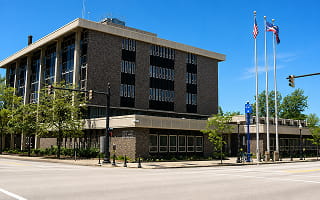
Always do thorough research before buying or investing in real estate. Property records are a reliable way to do this; they contain information on ownership history, property values, liens, taxes, zoning classifications, foreclosures, amenities, and other crucial details that can help you make informed decisions. Property records are public in Erie, meaning that anyone can view or request copies. The key is knowing where to look. Below, we have provided useful resources to help you find different types of Erie property records.
Erie County Assessment Office

The Erie County Assessment Office is responsible for valuing all real property in the City of Erie for taxation purposes. It serves as a key resource for property records, including current and prior ownership information, assessment/valuation histories, parcel characteristics and classifications, sales and tax data, and much more. You can use the office's Property and Tax Search tool to look up this information online. Searches may be done by address or parcel number, with options to view recent property transfers and parcel maps. Note that you may need to register an account and pay a subscription fee to access certain information online. If you prefer in-person services, you can visit the assessment office at Room 104, 140 West Sixth Street, Erie, PA 16501. You can also call (814) 451-6225 or email assessmentinfo@eriecountypa.gov for general questions and assistance.
Erie County Clerk of Records
The Erie County Clerk of Records maintains and provides access to deeds, mortgages, liens, satisfactions, powers of attorney, and other official documents related to property ownership and real estate transactions within the City of Erie.
The Clerk of Records offers online access to indexed records and images through the Infocon County Access System. Note that this system is subscription-based, meaning that you will need to register a user account and pay fees before viewing or obtaining copies online. If you prefer to access records in person, you can visit the Clerk of Records - Recorder of Deeds Office at Room 121, 140 West Sixth Street, Erie, PA 16501. Copy fees may apply. You can also call (814) 451-6246 or email recorder@eriecountypa.gov for inquiries and general assistance.
City of Erie Treasurer's Office
The Erie City Treasurer's Office is responsible for collecting most local taxes, including city, county, and school district real estate taxes. This office is a great resource for tax-related property information and offers online access to these records through the city's eGovPLUS portal. You can also visit the treasurer's office at Room 105, 626 State St., Erie, PA 16501-1128, for in-person services or call them at (814) 870-1214 for general inquiries and assistance.
Erie County Revenue and Tax Claim Bureau
The Erie County Revenue and Tax Claim Bureau handles the collection of delinquent property taxes for the City of Erie, making it another valuable resource for tax-related property information, including unpaid taxes, tax liens, tax certifications, and properties subject to tax sale proceedings. You can search this information online by name, address, or SBL (section, block, and lot) number using the bureau's Tax Inquiry tool. In-person services are also available at the tax claim office, located at Room 110, 140 West Sixth Street, Erie, PA 16501. You may also call (814) 451-6206 or email taxclaims@eriecountypa.gov for assistance and general inquiries.
Erie County Court of Common Pleas

The Erie County Court of Common Pleas handles legal matters that may affect real property in the City of Erie. The court is a key resource for records like foreclosures, liens, title disputes, landlord-tenant cases, civil judgments, and other similar property-related legal documentation. You can access some of these records online through the Pennsylvania Judiciary Web Portal or the county's Prothonotary Public Access tool. For information not available online, you can contact the Erie County Clerk of Records - Prothonotary Office at Room 120, 140 West Sixth Street, Erie, PA 16501, to search and obtain copies. Note that copy fees may apply. You can call (814) 451-6250 or email ProthonotaryRequests@eriecountypa.gov for more information and general assistance.
Erie Property Taxes
Erie property taxes are a vital funding source for local government services, such as public schools, police and fire protection, emergency response, road maintenance, libraries, parks, and community programs. The Erie County Assessment Office determines the taxable value of properties in the city, while tax collection is primarily managed by the Erie City Treasurer's Office, with the Erie County Revenue and Tax Claim Bureau stepping in to handle delinquent taxes. Erie County uses a base-year assessment system, meaning property values are tied to a fixed valuation year rather than being updated annually to reflect market fluctuations.
The county's current base year is 2013, so a property's assessed value reflects its estimated market value as of January 1 of that year. This assessed value generally remains unchanged unless there are physical changes to the property (like new construction, significant renovation, or demolition) or to correct errors. Property taxes are calculated by multiplying the property's assessed value by the combined millage rates of Erie County, the City of Erie, and the Erie School District.
Tax bills for city and county taxes are typically issued around late January or early February, while those for school district taxes are issued in July. Due dates also vary by taxing authority:
-
City taxes are due by May 31st, with a 10% penalty applied for payments made after this date, and a 2% discount offered for payments made on or before the last day of March.
-
County taxes are due by June 30th, with a 2% discount available for bills paid on or before the last day of April.
-
School district taxes are due by November 30th, with a 2% discount for payments made by the last day of September and a 10% penalty applied for late payments.
All taxes that remain unpaid by January 1st are considered delinquent and are handed over to the Erie County Revenue and Tax Claim Bureau, where additional penalties may be applied. There are several options available for paying Erie property taxes, including online, by mail, and in person. You can contact the City Treasurer's Office at (814) 870-1214 and the County Tax Claim Bureau at (814) 451-6206 for assistance.
![]() Assessments
Assessments

The Erie County Assessment Office assesses properties in the City of Erie to determine their taxable value. Assessments are done using a base-year assessment system, meaning each property's assessed value is tied to its estimated market value as of January 1, 2013, which is the county's current base year. While property records are reviewed periodically for accuracy, assessed values generally remain unchanged unless there is a major physical change to the property, such as new construction, substantial renovations, demolition, or damage, or if an assessment error must be corrected.
Property owners in Erie typically receive annual tax bills that reflect the current assessed value and the applicable millage rates for city, county, and school district. If you believe your property has been incorrectly assessed, you may file an appeal with the Erie County Board of Assessment Appeals. The annual appeal deadline is August 1st. You can call the assessment office at (814) 451-6225 for assistance or additional information about the appeal process.
![]() Appraisals
Appraisals

Erie assessments work similarly to appraisals. They both determine the fair value of property by comparing similar properties with others in the local area that have sold recently. In cases of odd structures or new construction, the county may call upon an appraiser to help determine the value. Estate planners, courts, and lenders also use appraisals to value real property.
![]() Tax Rates
Tax Rates

Erie, Pennsylvania, has a median effective tax rate of 3.63%, higher than the national median of 1.02% and Pennsylvania's state median of 2.81%. The average annual tax bill in the city is $3,033, which is also higher than the national average of $2,400.
Here's a look at how Erie's tax rate compares to other counties in Pennsylvania:
- Allegheny County 2.59%
- Blair County 1.57%
- Chester County 3.50%
- Dauphin County 2.88%
- Elk County 3.06%
- Huntingdon County 5.91%
- Lehigh County 2.78%
- Mifflin County 2.92%
- Montgomery County 3.94%
- Philadelphia County 1.20%
- Potter County 6.53%
- Susquehanna County 3.31%
- Tioga County 2.81%
- York County 3.29%
![]() Exemptions
Exemptions

Property taxes in Erie are generally above the national average, and many homeowners may find it difficult to keep up with annual payments. Thankfully, Erie County offers several tax relief programs designed to reduce the tax burden for qualifying residents. These include:
-
Homestead Exclusion: Lowers the assessed value of a homeowner's primary residence, reducing the taxable amount.
-
Disabled Veteran Real Estate Tax Exemption: Provides a full property tax exemption for honorably discharged veterans with a 100% service-connected disability who can demonstrate a financial need. Surviving spouses of these veterans may also qualify.
-
Senior Citizen Tax Relief: Reduces property taxes on the primary residences of eligible senior citizens and certain disabled homeowners, subject to an annual cap on the total amount of relief provided.
You can contact the Erie County Assessment Office at (814) 451-6225 for more information on available tax relief programs, eligibility requirements, or assistance with applying.
Erie Building Permits/Inspections
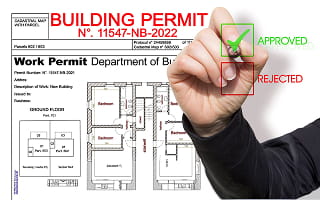
Permits are required for new construction, renovations, structural alterations, system upgrades, or demolition of existing buildings and structures in Erie. The Erie Bureau of Code Enforcement issues these permits. Exemptions are typically made for minor or cosmetic work like painting, flooring replacement, cabinetry installation, and routine repairs, provided the work does not affect a building's structural components or systems. You can apply for permits in person at the bureau's office, located at Room 407, 626 State Street, Erie, PA 16501. Applications may also be submitted electronically by emailing the appropriate permit application form(s), plans, and other supporting documentation to permits@erie.pa.us. You can contact the bureau at (814) 870-1313 or (814) 870-1473 for inquiries and general assistance.
The types of permits issued in Erie include:
-
Building Permits: Required for the construction of new structures, additions to existing buildings, or major structural renovations and repairs.
-
Demolition Permits: Required for tearing down existing buildings or structures.
-
Electrical Permits: Required for the installation, alteration, or repair of electrical systems, including new wiring, service panel upgrades, and the addition of circuits or heavy equipment.
-
Mechanical Permits: Required for the installation or replacement of heating, ventilation, and air conditioning (HVAC) systems, such as furnaces, boilers, and central air conditioning units.
-
Plumbing Permits: Required for installing new pipes, altering existing water or sewer lines, replacing major fixtures like water heaters, and other work involving plumbing systems.
When applying for any of these permits, you must submit the proper documentation (building plans, blueprints, contractor licenses, materials lists, etc.). You must also pay the appropriate fee.
Building inspections are part of the permit process, and they ensure that the work complies with local building and safety codes. You can schedule an inspection through the online portal or in person at the office during regular business hours.
Real Estate in the City of Erie

Erie is Pennsylvania's fifth largest city and the state's primary access point to Lake Erie, the Great Lakes, and the Saint Lawrence Seaway. Named after the Native American Eriez tribe, who once inhabited the area, it is affectionately known as "Gem City" for its sparkling natural harbor and "Flagship City" for its deep maritime roots and role as the home port of the historic U.S. Brig Niagara. The city was once recognized primarily as an industrial port but has since outgrown this image to become a center for insurance, healthcare, higher education, and tourism. It is home to cultural and historic landmarks like the Erie Maritime Museum, Warner Theatre, and Erie Art Museum and also serves as a gateway to Presque Isle State Park, one of Pennsylvania's most visited natural attractions.
Erie, Pennsylvania, has a population of 94,831 residents, with 45,557 housing units; of these units, 92% are occupied and 55% are owner-occupied. The city offers a diverse mix of housing options, including single-family detached houses, townhouses, rowhouses, duplexes, condos, apartment complexes, and historic mansions. Common housing styles include Queen Anne, Tudor, Colonial Revival, Federal, Italianate, Craftsman, Cape Cod, Ranch, and Mid-Century. The average price of a home in Erie, PA, is $193,250, up by 6.1% from previous years. Note that actual home values can vary significantly by neighborhood. Here are a few examples:
- East Bayfront $109,800
- Glenwood Hills $204,100
- Little Italy $138,600
- Northwest Harborcreek $264,773
- Wesleyville $137,914
- West Bayfront $121,300
The Erie, Pennsylvania, real estate market is competitive. Home values have risen modestly but consistently, driven largely by limited inventory and an influx of "refuge buyers" seeking affordability. Listed homes typically receive multiple offers and go under contract in around 18 days, with approximately 34% of listings selling above the asking price.
Searching across multiple government offices and databases to piece together a complete property profile can be time-consuming, but PropertyChecker simplifies the process by pulling key ownership details, tax records, transaction histories, and more into a single, easy-to-use platform. Whether you are buying, investing, or simply doing your due diligence, visit PropertyChecker.com to get the property information you need in minutes.